Your San Diego Custom Patio: A Step-by-Step Planning Guide from a Local Expert
Planning a custom patio installation in San Diego can feel overwhelming without the right roadmap. From navigating city permits to choosing materials that last in the coastal climate, missing a step can delay your project or add unexpected costs. This guide breaks down every stage, helping you design, build, and maintain your ideal outdoor living space with confidence. Ready to plan your patio? Request your free on-site design consultation and written estimate with CalCleanSeal today. Licensed, bonded, and insured—serving all of San Diego County. For more information, check out this step-by-step guide to build a lasting outdoor space.
Vision and Budget Planning

Creating a patio starts with a clear vision and a realistic budget. Let’s dive into how to set the foundation.
Define Your Patio Purpose
Begin with why you want a patio. Do you need a space for family barbecues, or a quiet retreat with a good book? Your purpose guides design choices. Consider how often you’ll use the space. If it’s primarily for large gatherings, think of a layout that allows movement. For intimate settings, cozy corners work best. Write down your ideas. They will serve as a blueprint for your patio’s design.
Estimating Size and Costs
Size impacts cost. A small patio might cost less, but make sure it fits your needs. Measure your space. Think about how many people you want to accommodate. $15 to $50 per square foot is a typical cost range. Larger patios allow for more features, like a fire pit or a dining area. Factor in the long-term value: a well-planned patio can boost your property value.
Budgeting for Quality Materials
Quality materials ensure longevity. While initial costs might be higher, they save money on repairs. Consider concrete, stone, or pavers. These materials withstand San Diego’s climate. Research costs: concrete is usually cheaper than stone. Decide on your must-haves and nice-to-haves. This helps prioritize when budgeting. Remember, investing in quality now means fewer headaches later.
Site Assessment and Permitting

Now that you have a vision and budget, let’s look at assessing your site and understanding necessary permits.
Evaluating Access and Slope
Assessing your site is crucial for a smooth installation. Check access points for equipment. A narrow yard might need smaller machinery. Evaluate the slope. A slope greater than 2% may require leveling or retaining walls. This prevents water pooling, which can damage your patio. Consider drainage solutions. Proper planning here avoids costly repairs down the line.
Understanding Patio Permits San Diego
Permits can be tricky. In San Diego, most patios require permits. Check with the city’s development services. This San Diego permit guide offers detailed information. Gathering these documents early prevents delays. Follow guidelines to avoid fines. Knowing the rules ensures your project starts on the right foot.
Navigating HOA Patio Approval
If you’re part of an HOA, approval is necessary. Each association has its own rules. Review your HOA’s guidelines. Submit your design plans for approval. In some cases, a simple sketch suffices. Most HOAs require 30 days to review applications. Early submission is key. Avoid surprises by keeping communication open with your HOA board.
Choosing Materials and Features

With permits and site details in place, it’s time to choose materials and design features for your dream patio.
Exploring Concrete and Paver Options
Concrete and pavers offer durability. Concrete is versatile and can mimic other materials. Pavers come in various shapes and colors. They’re easy to replace if needed. Consider stamped concrete for a unique look. Stamped designs add texture and character. Both options withstand San Diego’s weather well. Choose based on style and budget.
Customizing with Stone and Porcelain Pavers
Stone offers a natural look. It’s durable and timeless. Porcelain pavers are a newer option. They resist stains and scratches. They’re great for high-traffic areas. A mix of stone and porcelain can add visual interest. Consider these materials for walkways and sitting areas. They add elegance and value to your outdoor space.
Integrating Outdoor Living Spaces
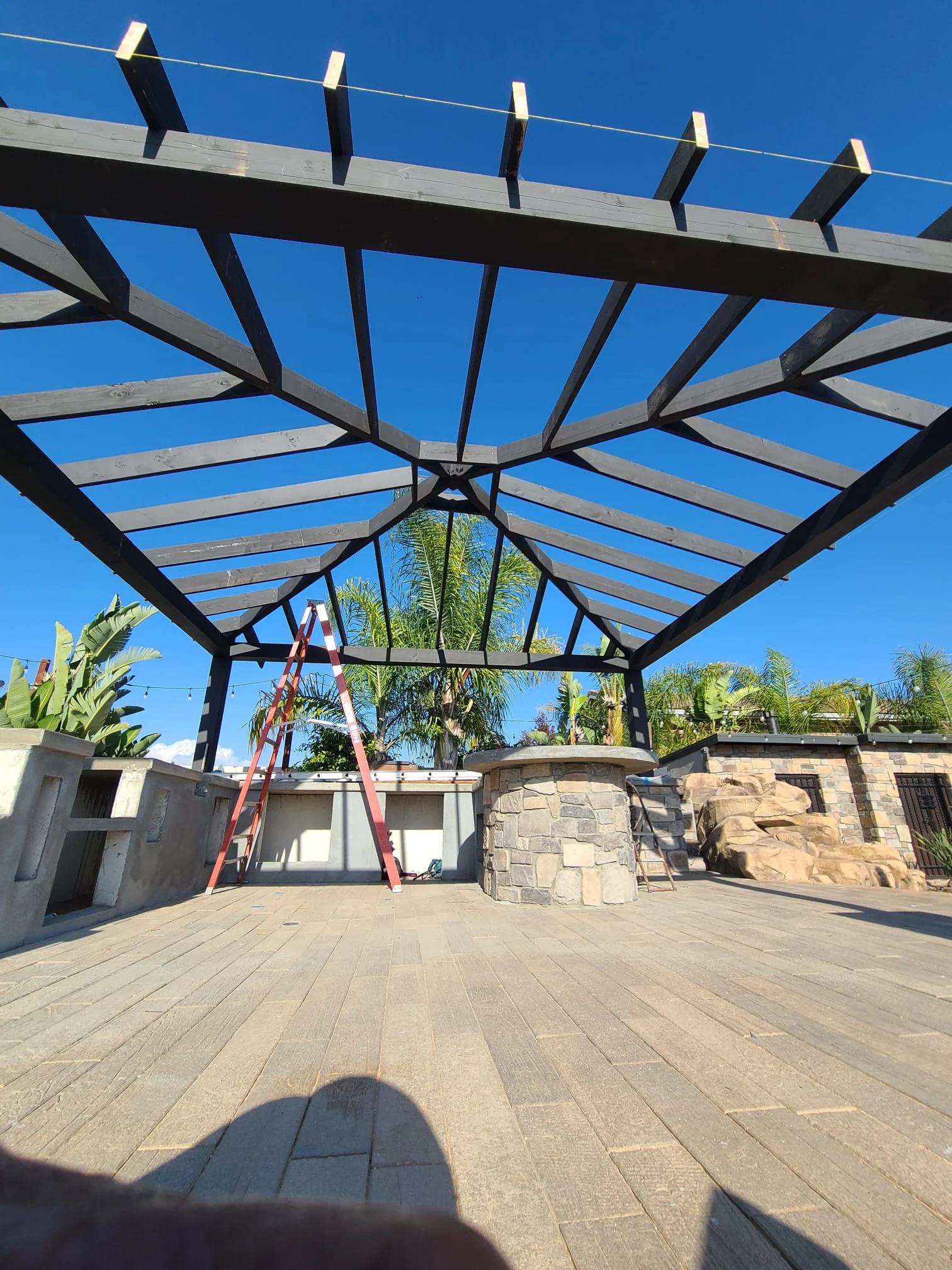
Think beyond the patio. Integrate features like a pergola for shade. This pergola installation guide can help. Add a fire pit or outdoor kitchen for entertaining. These features enhance usability. Plan for seating and greenery. A well-designed space feels like an extension of your home. It invites you to spend more time outdoors.
With these steps, you’re ready to bring your patio vision to life. Plan carefully, choose wisely, and enjoy a new favorite spot in your home.


