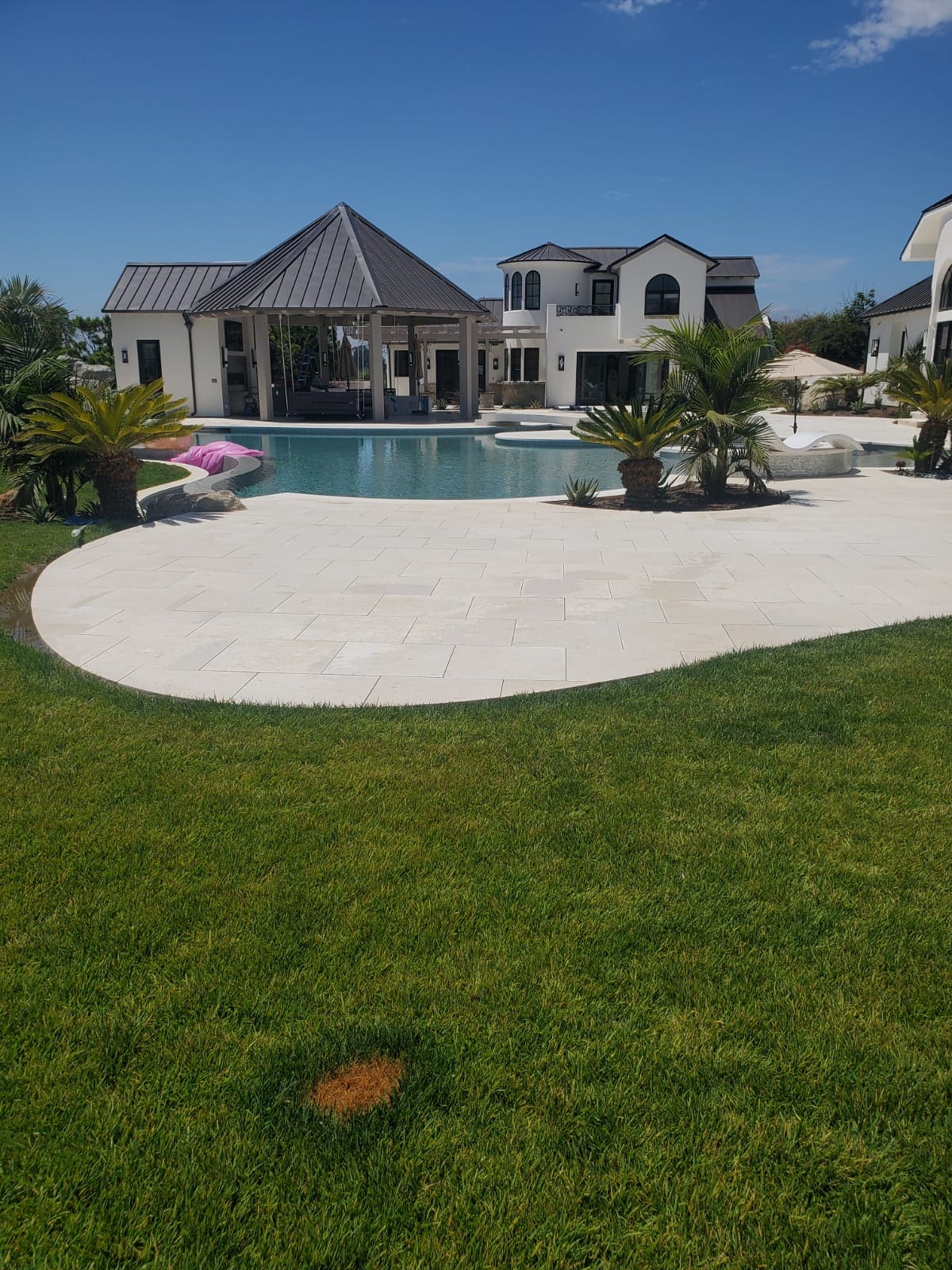

Concrete Resurfacing: The Key to a Beautiful Backyard Makeover
Resurfacing can renew suitable existing backyard concrete after assessment and preparation. It is one option to compare with targeted repairs or replacement. The right scope depends on substrate condition, movement, moisture, drainage, and intended use. Discuss those conditions before choosing a decorative finish.
Let us first explain what concrete resurfacing is.
Resurfacing applies a compatible cement-based system to suitable existing concrete after preparation and necessary repairs. It renews appearance but does not stabilize a moving slab. Existing cracks can return, and coating, moisture and drainage conditions need assessment first.
Benefits of Concrete Resurfacing
-
✅ Cost-Effective – In fact, resurfacing costs significantly less than removing and replacing concrete.
-
The work schedule and return-to-use time depend on the area, preparation, repairs, selected system and conditions. Confirm curing instructions and access arrangements in the written proposal.
-
✅ Aesthetic Upgrade – Choose from a variety of finishes, textures, and colors to suit your style.
-
✅ Durability – As a result, resurfaced concrete patios can last for many more years.
- ✅ Eco-Friendly – Because you choose not to tire the entire concrete, there is less waste than complete concrete demolition and replacement.
How to Resurface Your Concrete Backyard
1. Clean and Prepare the Surface
Dirt, grease, and debris must be removed before resurfacing to ensure proper adhesion. In areas with cracks or holes, a concrete repair compound should be used first.
2. Choose the Right Resurfacing Material
There are different resurfacing options depending on the look and functionality you want:
Stamped Concrete Overlay – Mimics the look of stone, brick, or wood for a high-end design.
Micro-topping creates a smooth, modern finish for a sleek backyard look.
Spray Texture Coating – Perfect for slip-resistant patios and pool decks.
Stained or Dyed Concrete – Adds vibrant color and a unique decorative touch.
3. Apply the Resurfacing Material
Application methods, thickness, bonding requirements, and curing depend on the selected system. Follow the manufacturer instructions rather than assuming every overlay can be troweled over old concrete without preparation.
4. Add Decorative Finishes (Optional)
Want a custom look? Consider adding:
🎨 Color Stains – Enhance the design with natural stone or earth-tone hues.
🔹 Stamped Patterns – To Create the appearance of pavers, tiles, or wood, use stencils.
🔹 Exposed Aggregate – A textured, slip-resistant finish ideal for patios and walkways.
5. Seal and Protect the Surface
Apply any specified protective treatment according to the overlay and sealer instructions, including curing, moisture, weather, and return-to-use requirements. Dry appearance alone does not establish readiness for sealing or traffic.
Concrete Resurfacing: The Perfect Backyard Upgrade
So, if your backyard concrete is cracked, discolored, or outdated, consider concrete resurfacing. It’s a perfect way to refresh your outdoor space without breaking the bank. Whether you prefer a modern or natural look, this cost-effective solution can bring new life to your backyard in just a few simple steps.
Ready for a backyard transformation? Explore your resurfacing options today and create the outdoor space of your dreams! 🌿✨
If you are in the San Diego area and are searching for a licensed contractor with years of experience in this field, Contact us. We can help 619-818-0113.
Request an estimate to discuss the existing concrete, desired finish and current appointment availability.


