San Diego Paver Costs: A No‑Nonsense Homeowner Guide (2025)
This guide explains the line items that affect a paver installation estimate. The original 2025 price examples have been removed because they were not supported by verified current project quotes. Request a written estimate for your property.
By California Clean and Seal • Updated September 18, 2025
Start with a Project-Specific Estimate
There is no single installed price for every patio, driveway, or pool deck. Measure the area and compare the same material, demolition, base design, drainage, access, and finish in each quote.
Where Your Dollars Go
1) Site Work & Access
- Demolition & haul‑off of concrete/turf/DG
- Access constraints (narrow gates, stairs, limited staging)
- Soils: sandy/coastal vs. clay pockets that need geotextile
2) Base & Prep (the deal‑maker)
- Base material, thickness, and compaction specified for site conditions, intended loads, and the paving system
- Screed bed, plate compaction, edge restraints
- Quality control: density, flatness, and drainage slope
3) The Pavers
- Concrete, natural stone, or porcelain (cost & handling differ)
- Stock sizes/colors vs. special orders
- Borders, inlays, herringbone/diagonals increase cuts
4) Labor & Finish
- Layout, cuts, setting, compaction, joint sand
- Drainage components (channel drains, basins, French drains)
- Sealing for stain resistance and easy cleaning
Compare the Scope for Your Space
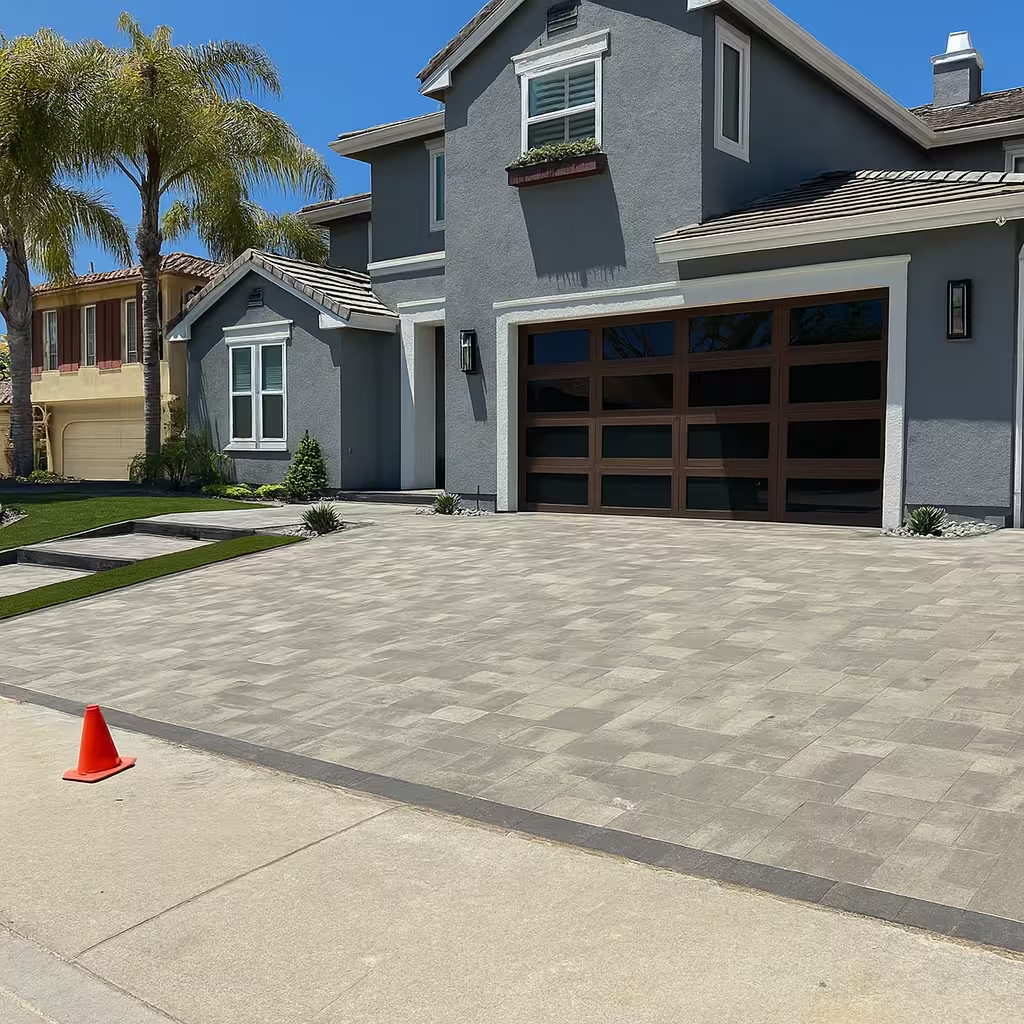
A patio estimate should identify pedestrian use, access, drainage, edges, and finish. A driveway also needs a design suited to the intended vehicle loads. A pool deck should account for coping, wet use, drainage, and the selected surface. Ask for itemized quantities and exclusions instead of applying a generic cost per square foot.
How to Control Costs Without Sacrificing Quality
- Pick efficient patterns (running bond/modular) to reduce cuts
- Use borders/inlays strategically in focal areas
- Right‑size the base: patios vs. driveways need different depths
- Bundle trenching for lighting/irrigation before pavers are set
- Choose readily available pavers to avoid special‑order premiums
- Discuss whether sealing suits the selected paver and follow the product maintenance schedule
Explore our related services: Paver Installation, Paver Cleaning & Sealing, and Concrete Resurfacing.
Permits & Drainage: San Diego Realities
Driveways and any work that touches the public right‑of‑way can involve permits or reviews. Drainage changes may trigger stormwater requirements. Check the latest guidance and confirm before you start:
- City of San Diego – Development Services: Permits & Approvals
- City of San Diego – Stormwater Guidelines & Checklists
- County of San Diego – Stormwater Best Management Practices (PDF)
- CMHA (formerly ICPI) – Application Guide for Interlocking Concrete Pavements
These external resources help you understand processes and standards; your specific project may differ—ask us how permitting applies to your address.
FAQs
- Are pavers more expensive than poured concrete?
- Upfront, often yes—especially for driveways. Individual pavers can sometimes be lifted and reset, but lifetime costs depend on the installation, condition, maintenance, and repairs. Compare the actual scope rather than assuming one material always wins.
- Do I need to seal my pavers?
- Optional but recommended in sunny or high‑use areas. Sealing reduces staining and makes cleaning faster. We’ll recommend a finish (natural, enhanced, or wet look) that fits your space.
- How long does a typical project take?
- Ask for a project schedule covering demolition, base work, drainage, installation, and return to use. Access, approvals, weather, and the selected system can affect timing.
Next Step: Get a Firm Number
Every property is different. We’ll verify access, base depth, drainage, and the pattern you want—then give you a written, line‑item quote that respects your budget and timeline.